
A New Chapter in Kyauktaw
In parts of Rakhine State, survival has become a daily calculation.
What can we eat today?
How do we stretch what little we have?
What happens tomorrow?
For many Rohingya families in Kyauktaw Township, they are constant, pressing realities. With livelihoods disrupted by conflict, aid restricted, and inflation rising, even the most basic needs, food, healthcare, education, have become difficult to secure.
A group of young people working within their own community, a simple but meaningful idea has taken shape:
Raise fish. Share responsibility. Build income. Restore dignity.
Across four villages—Yadanapon, Haya, Pa Lat Kay, and Ah Let—30 vulnerable families in each community will take part. Together, 120 families (around 610 people) will raise fish in shared village ponds, supported with initial funding for fish stock, feed, and transport.
But this is not the first step.
A Step We’ve Already Taken
Just days earlier, another small but meaningful project was carried out in Taungbway village.
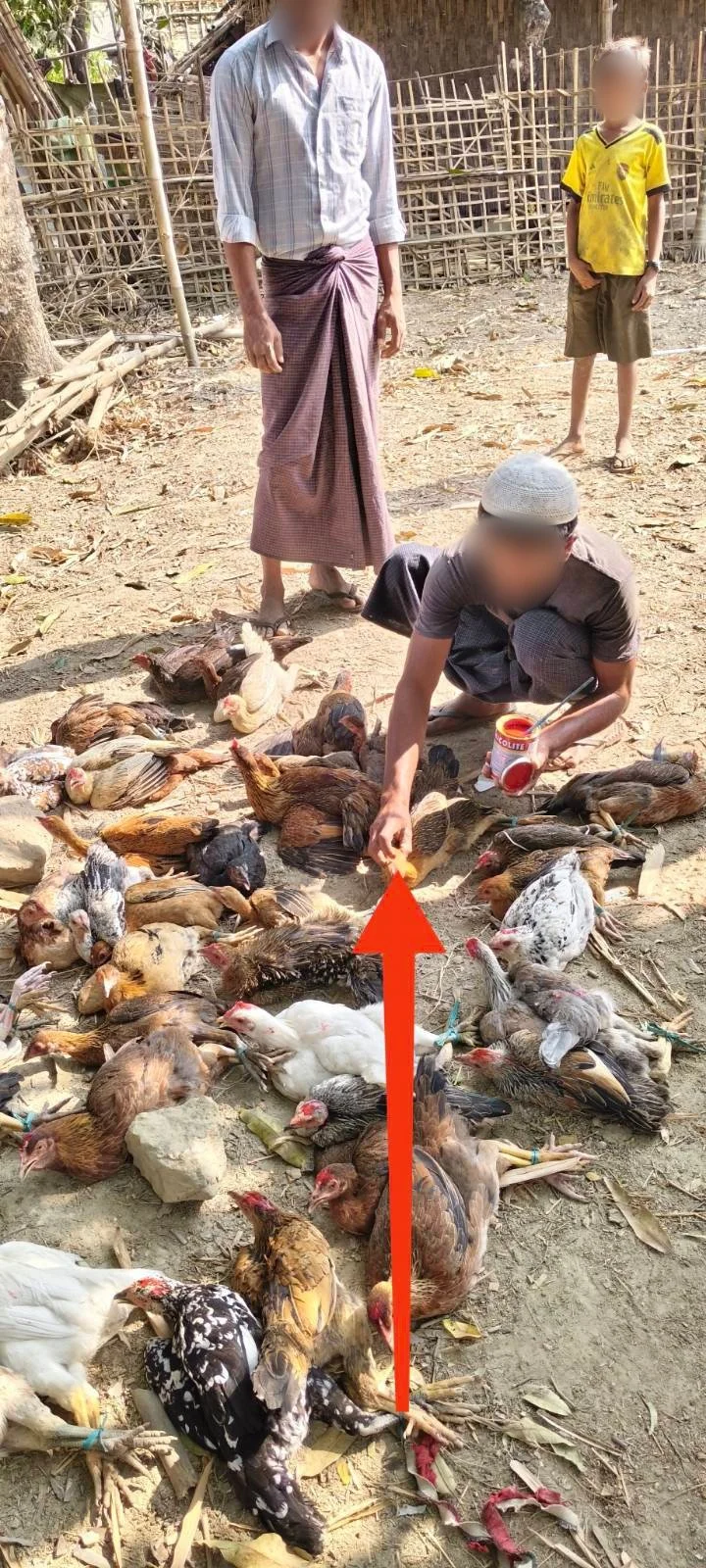
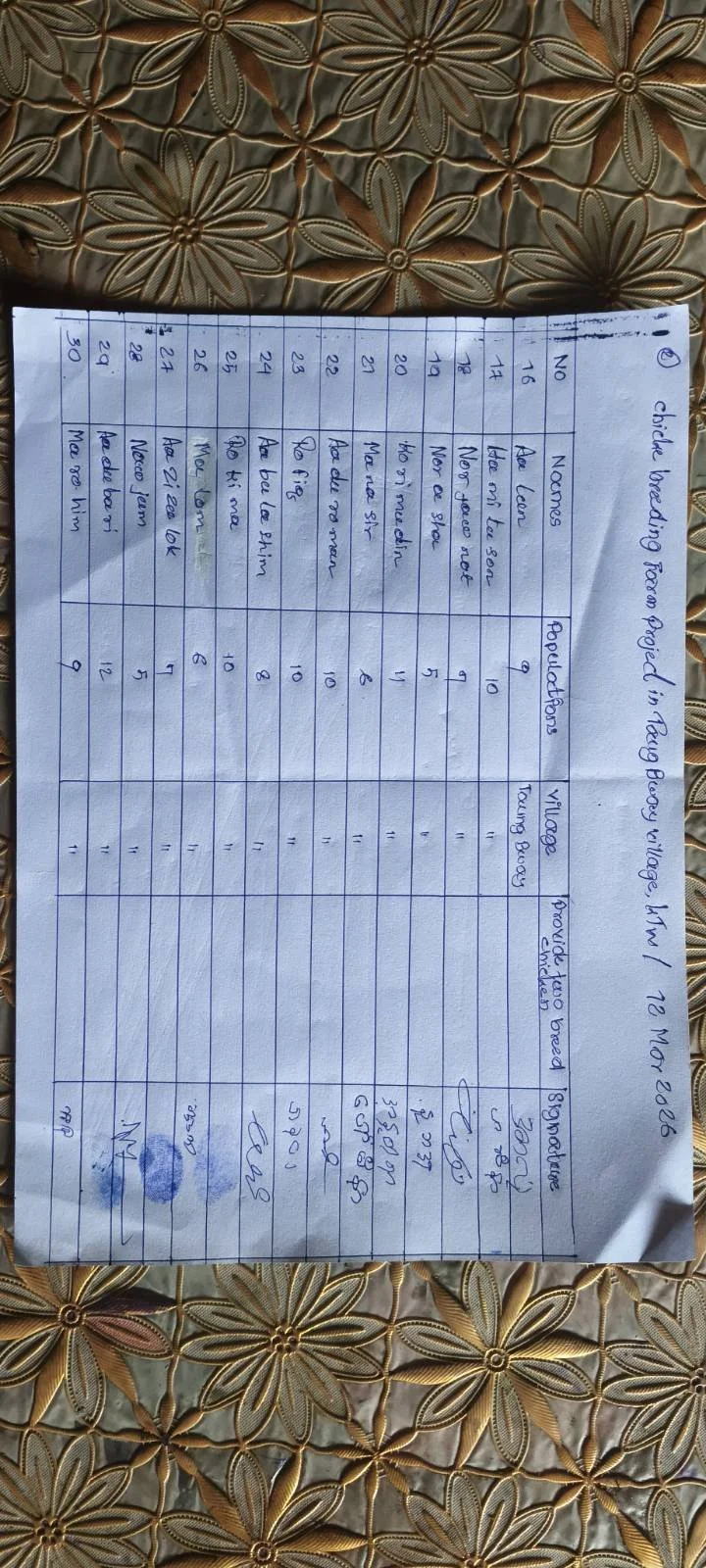
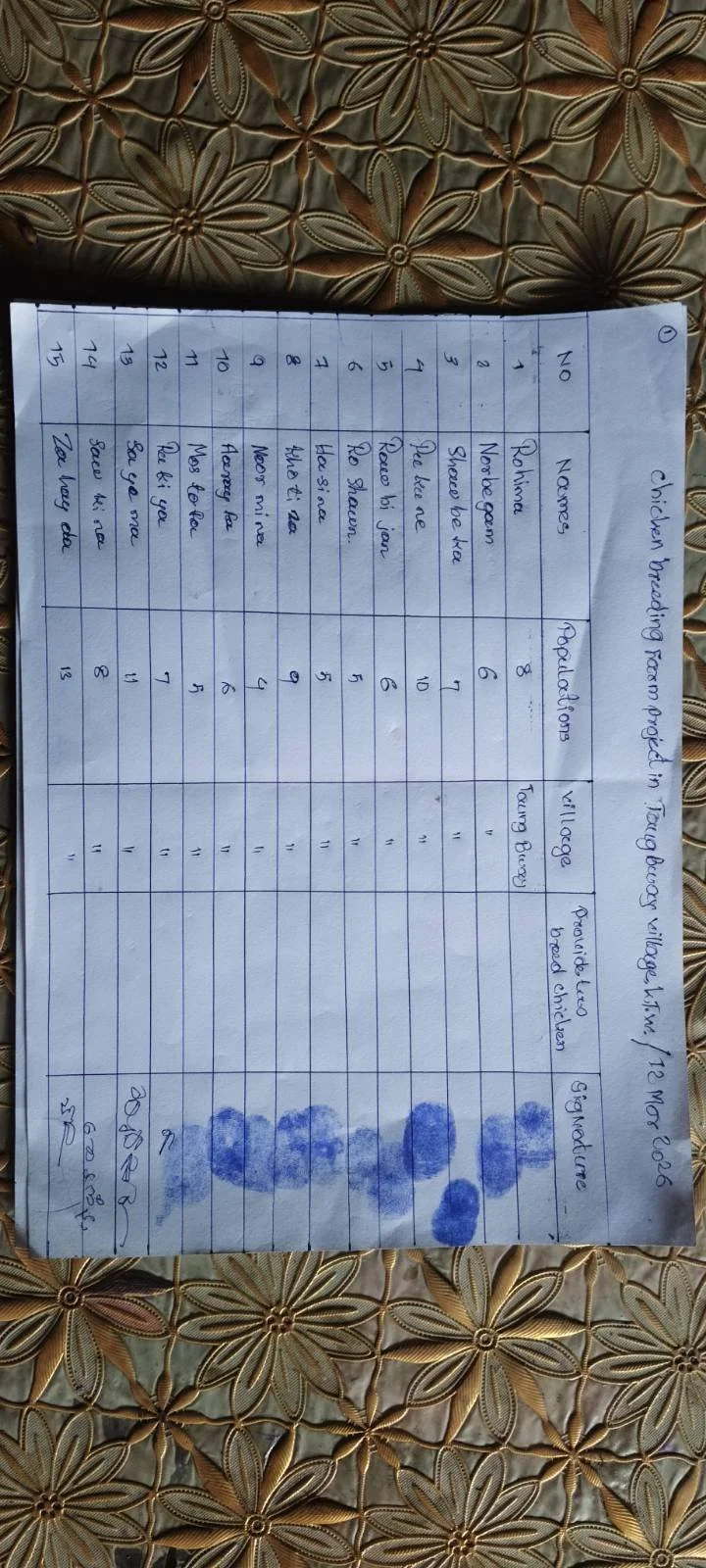
Through a chicken breeding initiative:
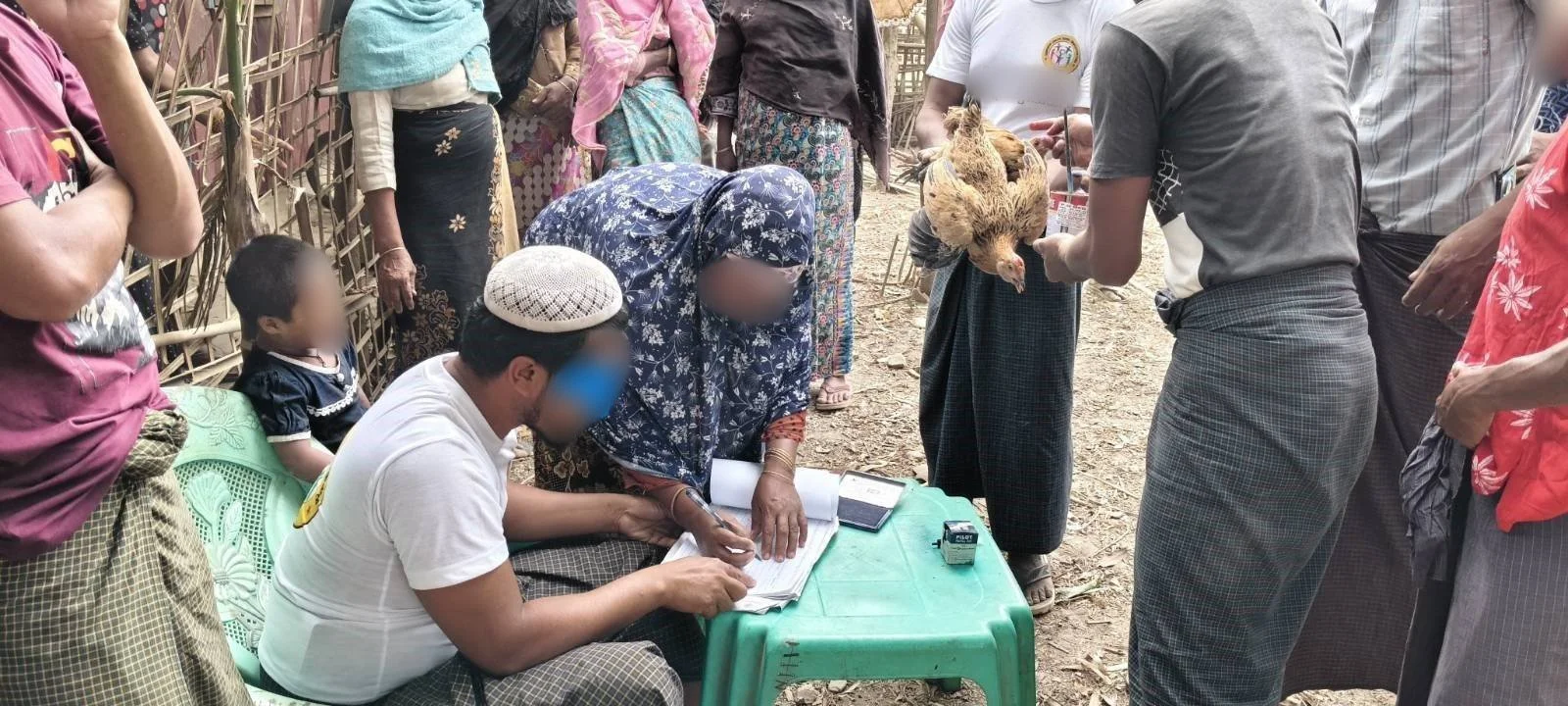
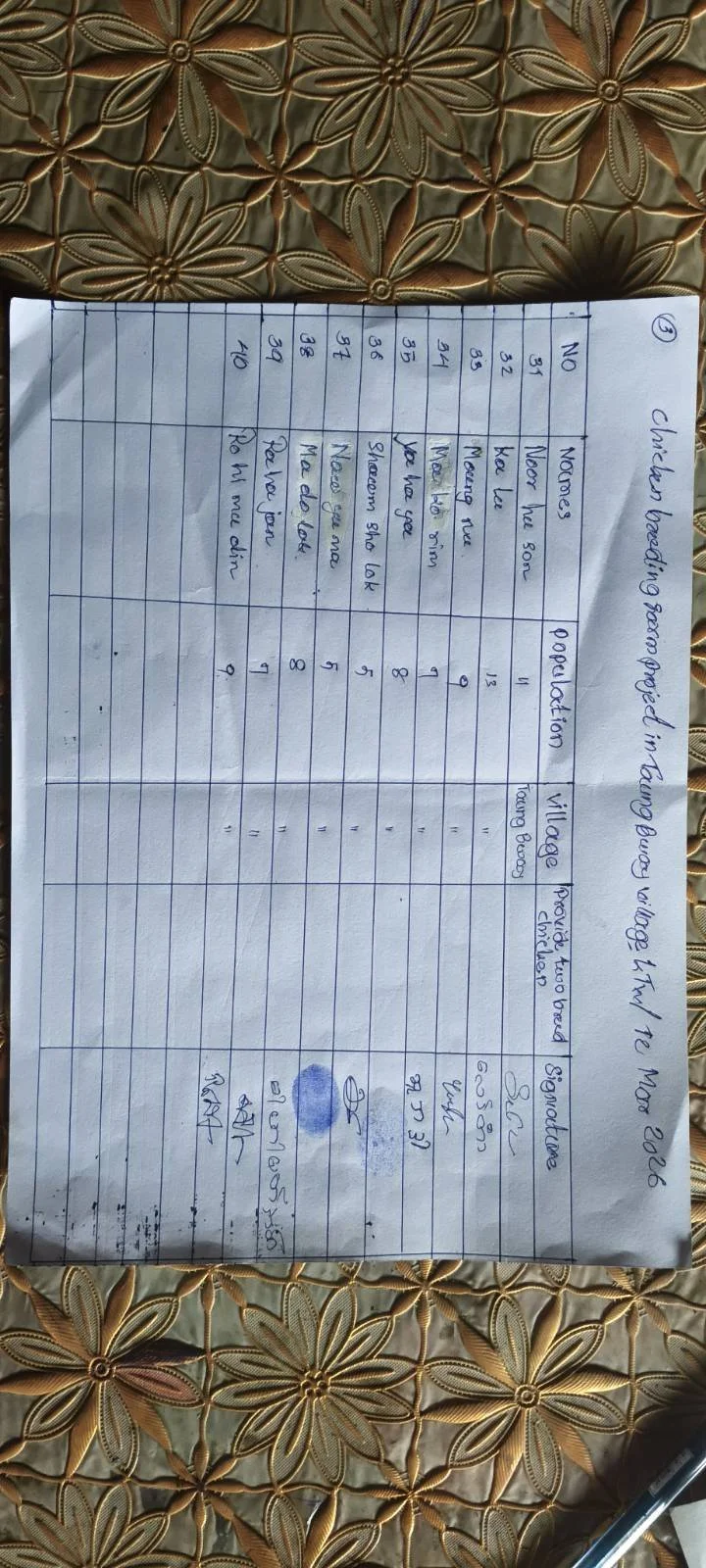
40 families (317 people) received support
Each family was given two chickens to begin raising
Total project cost: 3,720,000 MMK (~$1,750 USD)
Remaining balance: 59,000 MMK
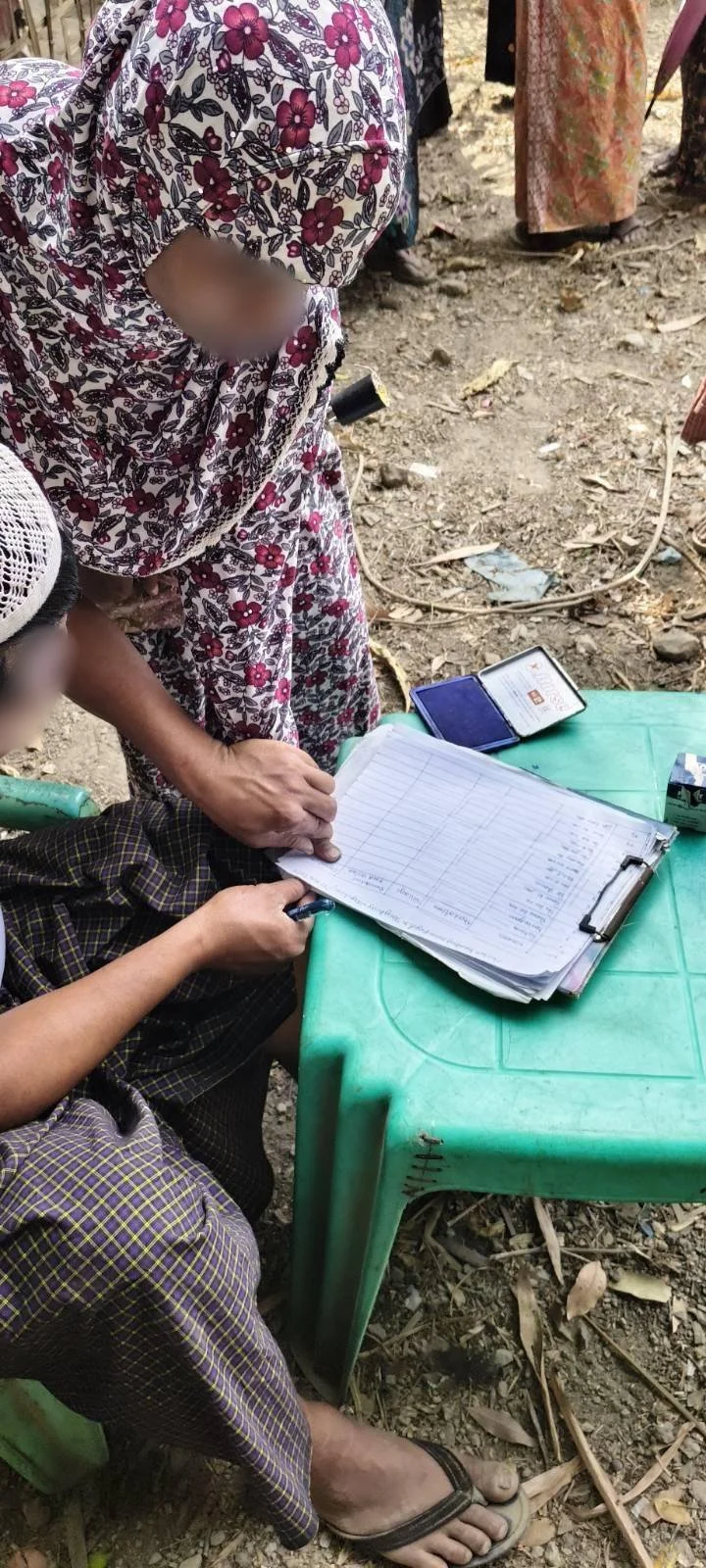
Families gave thumbprints to confirm receipt, a simple but powerful act of accountability and ownership. Chickens were also marked with color, ensuring they are used for breeding, not eaten or sold immediately, so that each family can build something over time.
More Than Food
The upcoming fish project builds on that same idea.
Yes, the fish will provide protein, something many families are currently lacking.
But just as importantly, this is about income.
After a year of breeding, the fish can be sold. The profits go directly to the families, and part of that income can be reinvested into future breeding.
Over time, this creates something rare in crisis settings:
A livelihood that continues beyond the first intervention.
Why This Matters Now
The need is urgent.
Local communities describe a situation where:
Income opportunities have nearly disappeared
Food insecurity and malnutrition are rising
Families struggle to access healthcare and education
Parents carry the psychological burden of not being able to provide
The hardship is not only physical, it is deeply emotional.
When a parent cannot support their child, it leaves a quiet but heavy weight.
Projects like these begin to lift that weight, not all at once, but slowly, meaningfully.
Led by the Community, For the Community
What makes this work possible is local leadership.
Select the most vulnerable families
Ensure fair distribution
Monitor progress closely
Document each step
This is not outside aid being dropped in.
It is something built with the community, by the community.
What It Takes
The fish farming project requires:
Fish stock for 4 villages
Feed (rice husks)
Transportation
Total: 4,000,000 MMK (approx. $1,900 USD)
That breaks down to:
Around $16 per family
Around $3 per person
Small amounts—yet capable of creating long-term change.
Looking Ahead
The fish will take about a year to mature.
The chickens will multiply over time.
And slowly, these small efforts begin to shift something deeper:
From dependence → to self-sufficiency
From scarcity → to possibility
From uncertainty → to hope
Not overnight.
Not dramatically.
But steadily.