
Learning After Displacement
For displaced families in Myanmar, reaching a safer place does not mean their difficulties are over. Parents must find new work, children must adjust to unfamiliar surroundings, and education often becomes one more uncertainty in lives already shaped by conflict.
In Pyin Oo Lwin Township, some displaced families now live near construction sites where their parents work as masons, carpenters, painters, ironworkers, electricians, and general laborers. Other children have found safety and an opportunity to continue their education in local monastic communities.
Through your support, Better Burma’s recent educational assistance, our team on the ground provided essential school supplies to 210 displaced children across these communities.
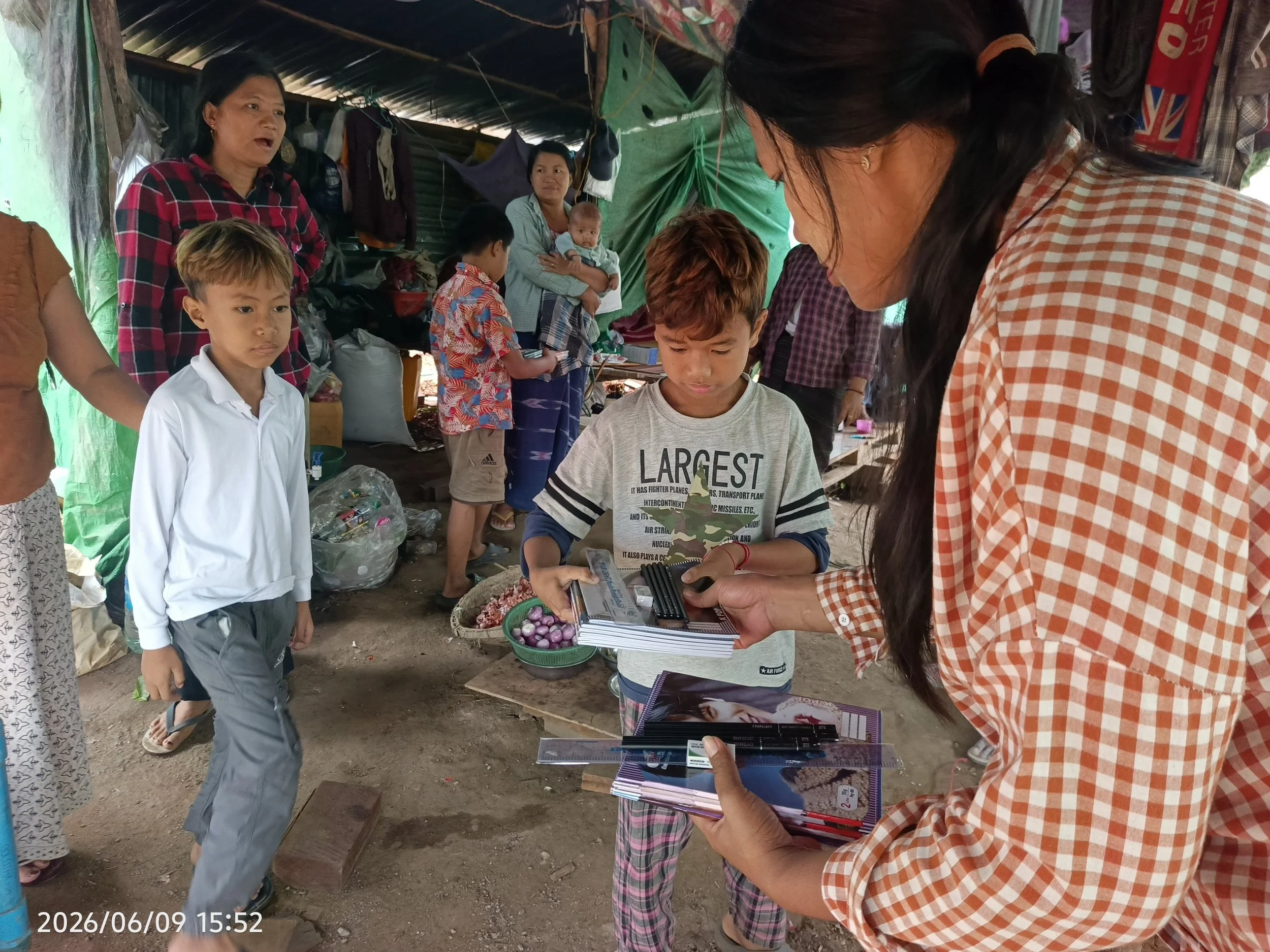
Our team reached 60 children from displaced families living at different construction sites in villages around Pyin Oo Lwin Township.
The families originally came from conflict-affected areas of Sagaing, Magwe, and Mandalay Regions, including Monywa, Chaung-U, Pakokku, Myaing, Pauk, and Tada-U townships. Some came from communities along the routes leading toward southern Chin State, while others fled villages affected by fighting in central Myanmar.
After leaving their homes, the parents took whatever work they could find. They now help construct buildings throughout the township while caring for their families in temporary living arrangements near their workplaces.
Because the families were scattered across different villages and construction sites, distributing the supplies required several visits. Our team traveled from one location to another to make sure the children were reached.
Each child received notebooks and other basic stationery, including pens or pencils, rulers, and erasers. These are simple materials, but they help ensure that displacement does not completely interrupt a child’s opportunity to learn.
A Nunnery Responding to Growing Displacement
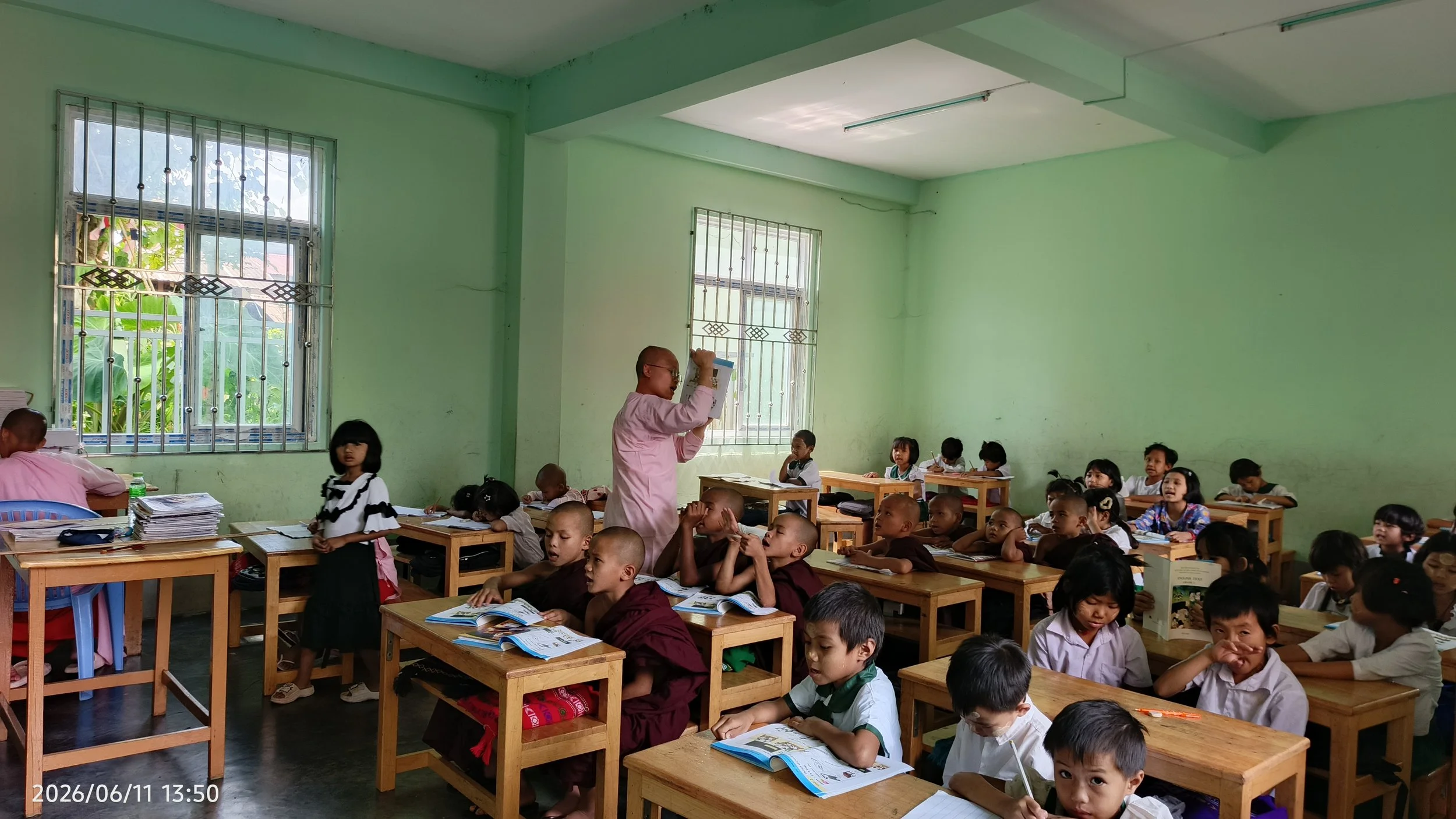
The second distribution supported 150 children studying and boarding at Shwe Sin Min Nunnery School in downtown Pyin Oo Lwin.
The nunnery has experienced an increase in the number of displaced students arriving from the Yaw-Saw area of Magwe Region, where military activity has intensified along the routes toward Chin State. It has also accepted children from areas west of the Chindwin River, including Yinmabin Township in Sagaing Region.
Alongside its regular students, the nunnery now accommodates and educates children who can no longer safely remain in their home communities.
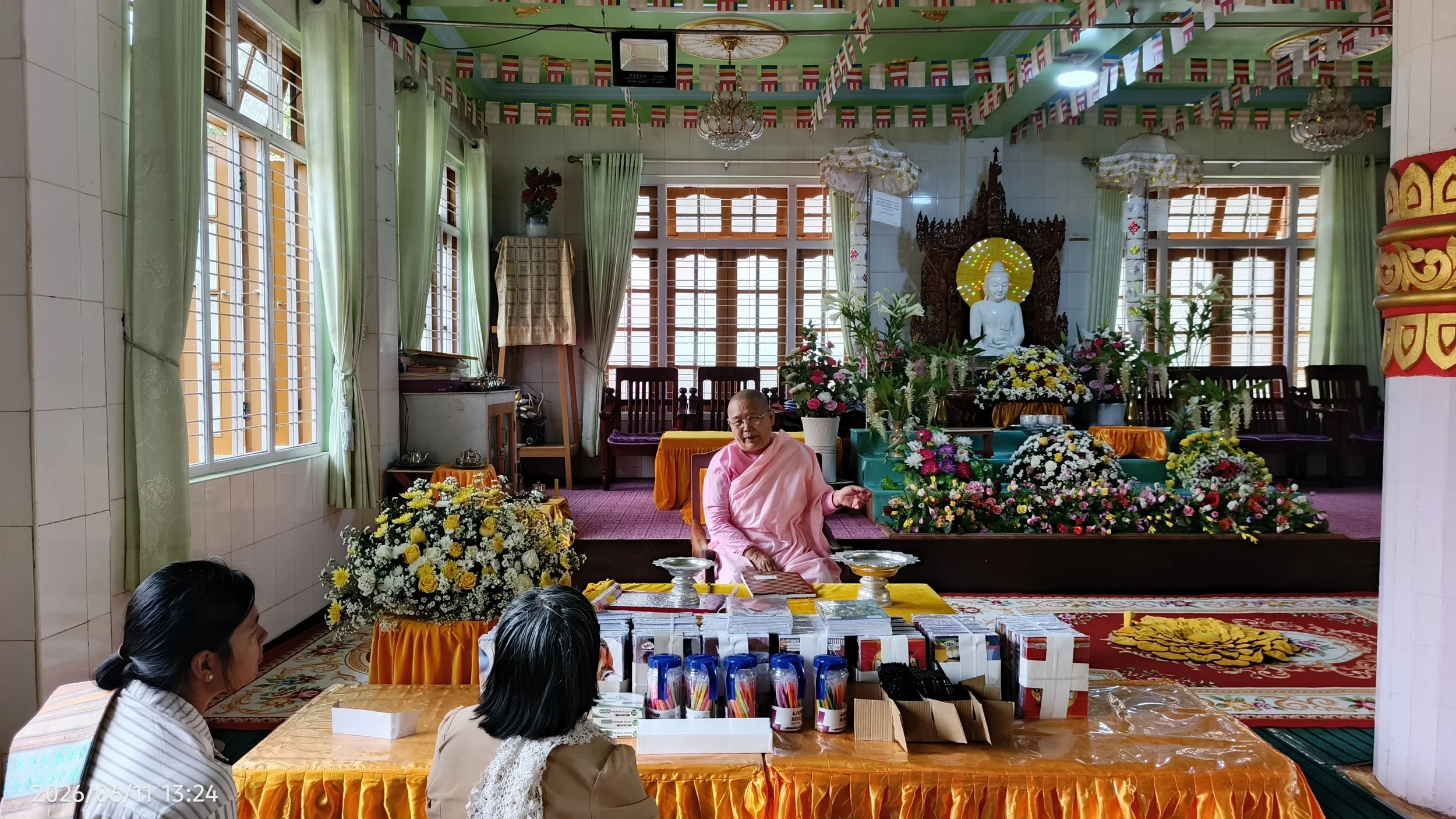
Rather than hold a large public distribution, the stationery was entrusted directly to the head nun. This decision was made at the request of the nunnery’s leaders, who were concerned about the children’s safety and privacy.
The head nun assured our team that the supplies would be carefully managed by the teachers and distributed according to each child’s needs. Students can request new notebooks and other materials from their teachers whenever they need them.
This approach also helps the school make the supplies last throughout the academic term. As the head nun explained with gentle humor, young children sometimes tear pages from notebooks to make toys or kites. By keeping the materials with the teachers, the nunnery can ensure that every item is used for the children’s education.
More Than a Place to Study
During the visit, our team walked through the school and classrooms, spoke with the students, and encouraged them to continue working hard.
The visit also offered a clearer picture of the responsibility the nunnery has taken on. It does much more than provide lessons. It must offer accommodation, meals, supervision, and daily care to a growing number of children who have experienced displacement.
Preparing meals for so many students requires a constant supply of cooking oil, vegetables, firewood, and other essentials. The nunnery has received rice from local donors, but its remaining daily needs continue to place pressure on the community.
This is the quiet work being carried out by monastic schools across Myanmar. When families are displaced and public services are disrupted, nunneries and monasteries frequently become places of refuge. They provide children with stability and a routine while helping them remain connected to education.
Keeping Education Within Reach
The 210 children supported in Pyin Oo Lwin come from different places and live under different circumstances. Some return from school to temporary shelters beside their parents’ workplaces. Others sleep in dormitories shared with fellow students at the nunnery.
What connects them is the experience of having their lives disrupted by conflict, and their determination to continue learning.
A notebook cannot replace a lost home or remove the uncertainty surrounding a displaced family. But it allows a child to enter a classroom prepared. It provides a place to practice handwriting, solve problems, record lessons, and imagine a future beyond the present crisis.
We are grateful to the local volunteers, teachers, head nuns, suppliers, and supporters who helped these materials reach the children. Most of all, we honor the families and monastic communities working every day to keep education within reach, even under extraordinarily difficult circumstances.