
A Place to Begin Again
After the earthquakes damaged nunneries across Sagaing, many children lost more than the buildings where they lived. They also lost the classrooms, routines, and communities that had allowed them to continue their education despite conflict and displacement.
Through your help, Better Burma’s earthquake recovery efforts, ten nunneries in Sagaing City received assistance to rebuild. As new shelters became available, children gradually began returning. They were joined by other young nuns and lay children seeking safety and access to education.
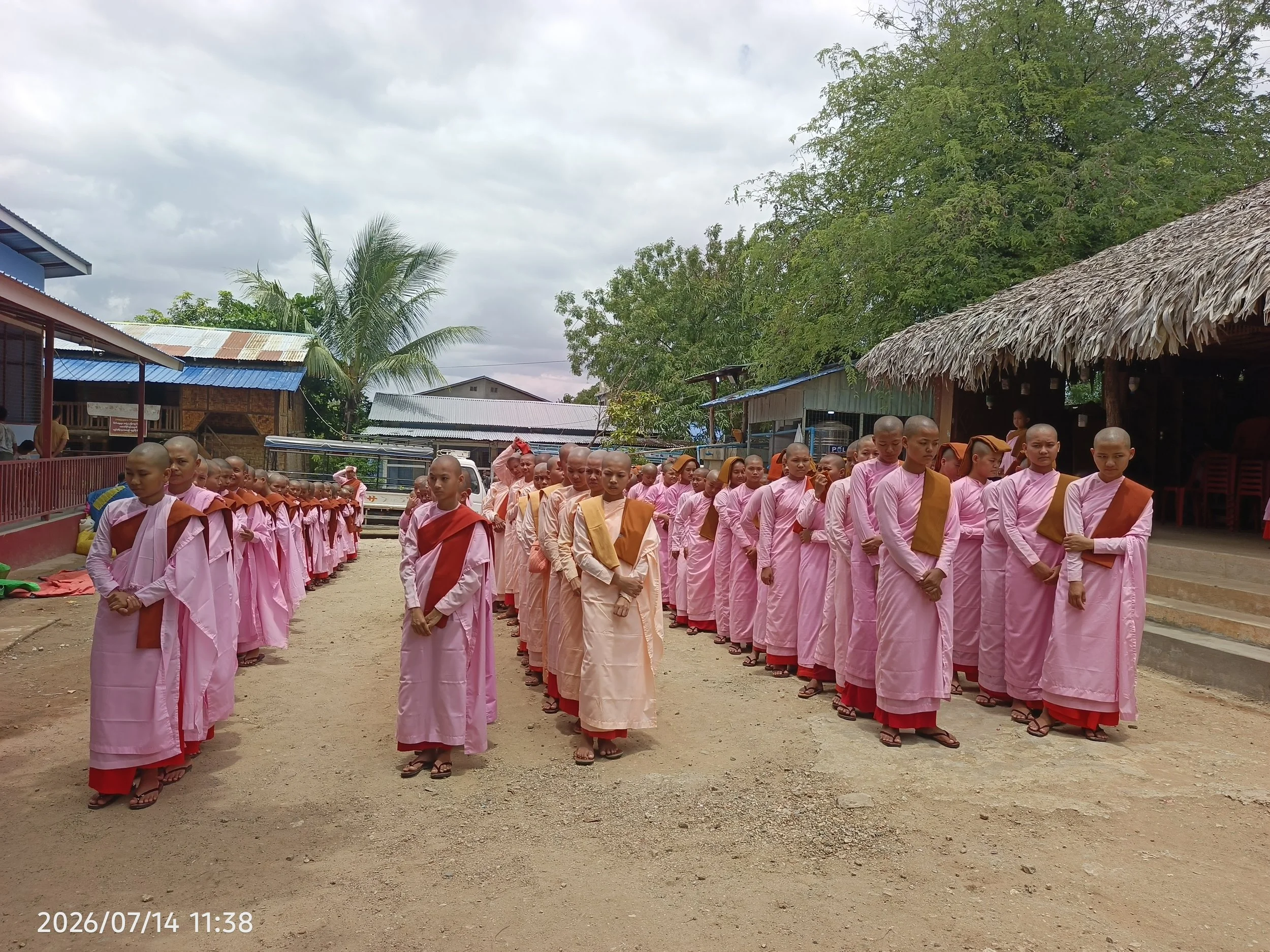
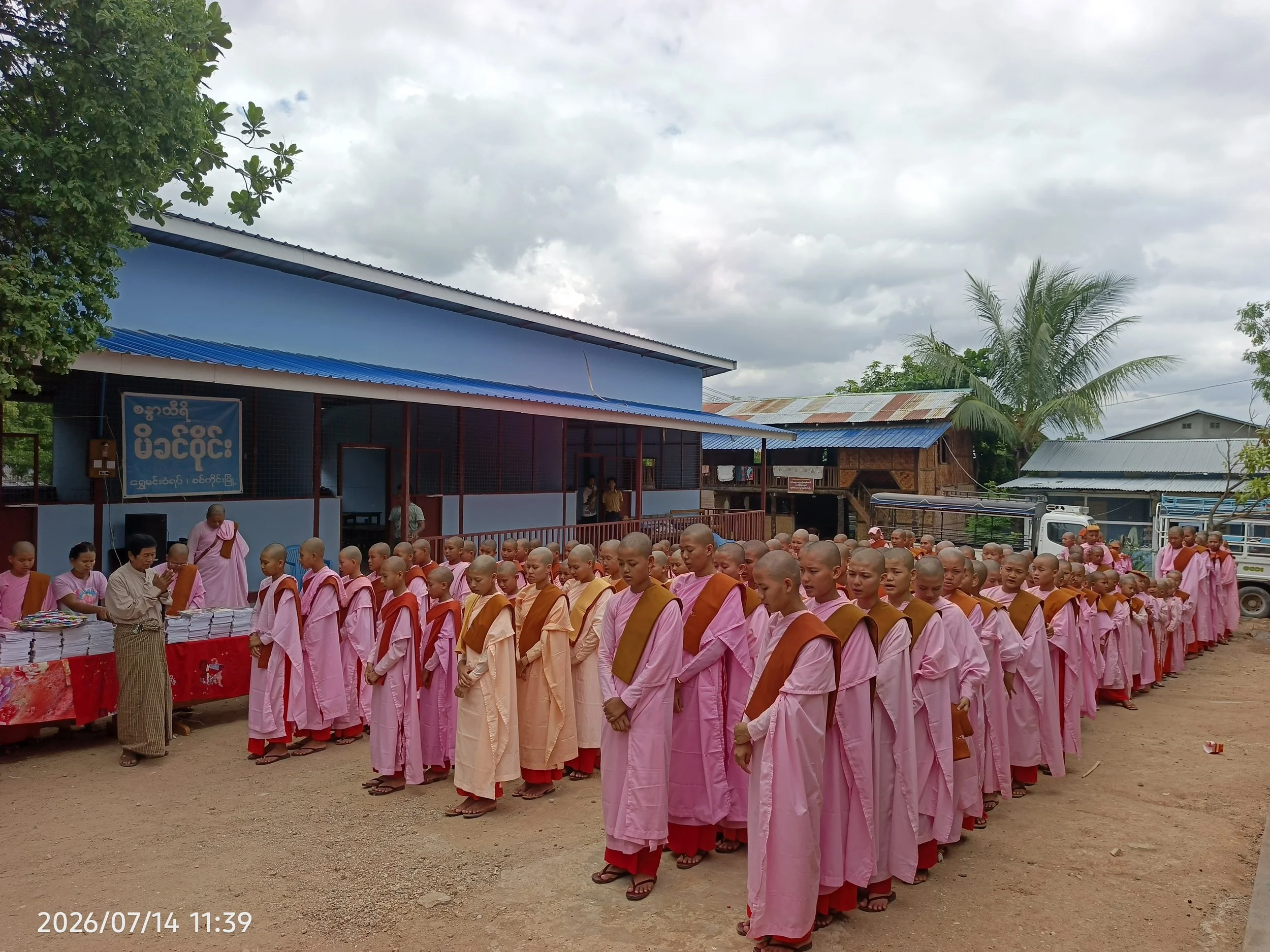
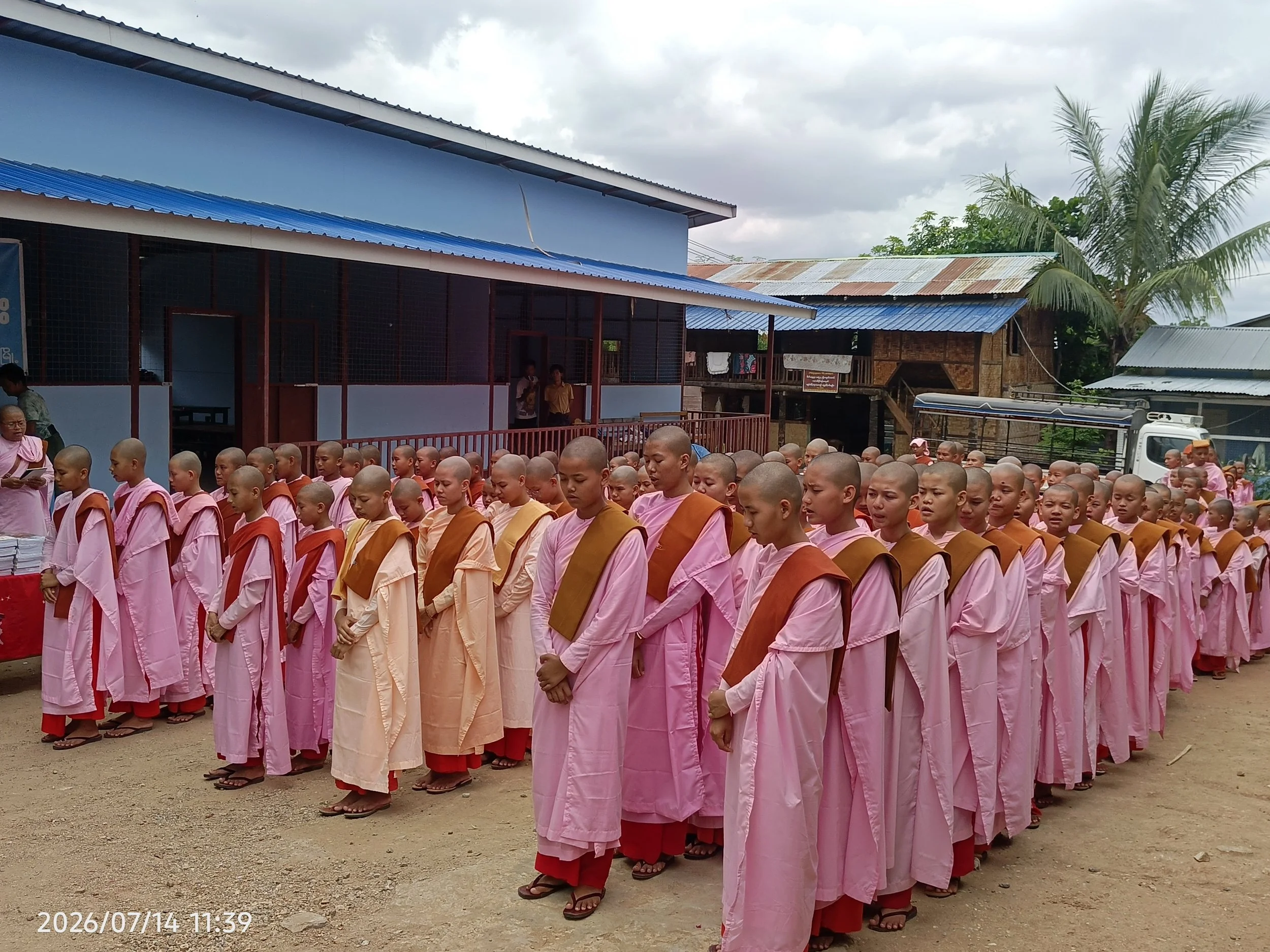
Today, these communities are caring for an increasing number of students. Our team recently returned to provide essential school supplies to 297 children living and studying across the ten rebuilt nunneries.
New Shelters, Renewed Responsibility
The children come from many parts of Myanmar, including Taze, Ye-U, Kantbalu, and Zeegone townships in Sagaing Region; Madaya and Sintgu townships in Mandalay Region; and Nansang in northern Shan State.
Many were already displaced by conflict before experiencing the earthquakes in Sagaing. When the nunneries were damaged, some had to leave once again. At the beginning of the new school year, they returned to the rebuilt communities, often accompanied by other children from areas affected by continuing armed conflict.
The head nuns have responded by opening their doors to more students, particularly girls from conflict-affected townships.
Reflecting on the shelters that had been rebuilt, one head nun told our team:
“We survived the danger of the earthquakes, and now we have new shelters again. Because donors generously gave us homes back, we must work hard to serve more children.”
Her words captured what the rebuilding effort has made possible. The shelters are not only physical structures. They have allowed monastic communities to resume caring for children who otherwise might have nowhere safe to live or study.
Ten Communities, 297 Children
The stationery assistance reached children at the following nunneries:
Vimutti Rasārum — 52 children
Khemāramsī — 21 young nuns
Sintgu Ratanā — 4 young nuns
Sāsana Mandai — 18 young nuns
Ariyāsīsa — 45 young nuns
Yadanar Myaing — 15 young nuns
Sīlāsana — 30 young nuns
Htut Myat Aung Myae — 32 young nuns
Chandātejā Rāma — 73 children
Yadanar Soe Moe — 7 young nuns
Each child received notebooks and other essential materials, including pens or pencils, rulers, and erasers.
For the nunneries, having these supplies available brought significant relief. Before the distribution, some communities had considered collecting partially used notebooks and binding together the remaining blank pages so the children could continue writing their lessons.
The new supplies will help meet their classroom needs during the first months of the school term.
A Difficult Journey Into Sagaing
Delivering the supplies required patience, flexibility, and careful coordination.
Basic stationery had become increasingly difficult to obtain. No single vendor had enough notebooks, pencils, erasers, and other materials, so our team worked through a network of different suppliers. Some stores had only a few dozen single-line notebooks, while others did not have the four-line handwriting books required by younger students.
After several days of searching, the team was finally able to obtain the required supplies through local contacts in Mandalay.
Transporting large quantities into Sagaing presented another obstacle. Bus drivers were reluctant to carry boxes or sacks of school materials because vehicles entering the region are closely searched at checkpoints. Drivers told our team that packages may be opened or damaged during these inspections.
The team had to travel between Mandalay and Sagaing while making careful arrangements to move the supplies safely.
The original plan was to visit each of the ten nunneries and distribute the materials separately. However, worsening security conditions made this approach too risky.
A newly established checkpoint near the Sagaing Hills also meant the team could no longer stay at the nunnery used during earlier visits. Local helpers and head nuns recommended bringing everyone together at a single location instead.
An orphanage nunnery school situated in a residential area was selected as the gathering point. Unlike many of the nunneries located deeper in the Sagaing Hills, it offered a more practical and comparatively safer place for children, nuns, drivers, and local helpers to assemble.
Finding a suitable date was another challenge. In previous years, most of the children attended monastic schools with similar schedules. This year, some continued in monastic education while others were required to attend public schools. Because their school calendars and days off were different, the distribution had to be rescheduled until all ten communities could participate.
Despite these difficulties, the children and their caregivers were finally able to gather and receive the supplies.
Barriers Inside the Education System
According to the head nuns and our local team, some children who studied continuously in monastic schools have not been allowed to enter the appropriate grade level in public schools.
For example, a young nun who completed kindergarten through Grade 2 at a monastic school was not permitted to enter Grade 3. Similar problems have affected entire groups of young nuns from the same community.
Some students have been required to take placement examinations and have then been assigned to public schools controlled by the education authorities. The head nuns expressed concern that children from conflict-affected areas were not always assessed or placed fairly.
Many also did not receive the uniforms, school bags, or stationery normally distributed through the public education system.
These policies have created additional responsibilities for the nunneries. Children from the same community may be assigned to two or three different public schools, requiring the nuns to arrange multiple daily journeys. Some communities must organize transportation in the morning, at lunchtime, and again at the end of the school day.
The nunneries are therefore managing not only shelter, meals, and education, but also the complicated daily transportation needed to keep the children in school.
The Meaning of a Notebook
One head nun described how difficult it had become to keep enough notebooks available for every child. The community had considered collecting used schoolbooks from local families and salvaging any pages that remained blank.
She spoke with humor about how the situation reminded her of the difficult years of her own childhood, but the seriousness of the challenge remained clear.
After receiving the supplies, she expressed her relief: the children would now have enough notebooks for the first several months of the semester.
This distribution did not eliminate the many barriers surrounding their education. It did, however, remove one immediate burden from the nunneries and ensure that 297 children could begin their lessons with the materials they need.
Their rebuilt shelters gave them a place to return to. These books and pencils now give them another small but important opportunity to begin again.
We extend our sincere gratitude to everyone who supported the earthquake recovery work and this educational assistance. We are equally grateful to the head nuns, teachers, local volunteers, drivers, and community members who continue caring for these children amid conditions that remain deeply uncertain.